
Advocacy in Action: Dr. Kenneth B. Wiltbank Reflects on 15 Years of Service to Endodontics
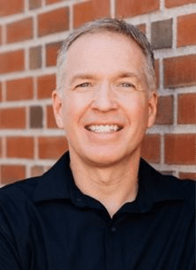 Dr. Kenneth B. Wiltbank earned his dental degree from Oregon Health & Science University (OHSU), graduating in 1998. He later completed his endodontic residency at The University of Texas Health Science Center at San Antonio in 2007.
Dr. Wiltbank is a Diplomate of the American Board of Endodontics and an active leader within the American Association of Endodontists (AAE). He has served as the AAE’s representative to the American Dental Association’s Code Maintenance Committee and the American Association of Dental Consultants, helping shape discussions related to dental coding and benefits policy. He is also a member of the American Dental Association and the Oregon Dental Association.
In addition to private practice, Dr. Wiltbank remains engaged in education and mentorship. He serves as an adjunct associate professor of endodontology in the department of endodontics at the OHSU School of Dentistry and frequently participates as a guest lecturer.
Originally from New Jersey, Dr. Wiltbank is the oldest of six children. He lived in Guatemala for two years and is fluent in Spanish. After practicing as a general dentist in Oregon for seven years, he pursued advanced specialty training in endodontics in Texas before returning to Oregon. Dr. Wiltbank and his family currently reside in Tigard.
Advocacy Beyond the Operatory
I suppose I’m an advocate for endodontics. I do not always think of myself that way because, in many respects, I have simply been doing my job and trying to help where I can. But over time, I’ve realized that advocacy is woven into much of the work I’ve done — advocating for endodontists, dentistry and, most importantly, patients.
For the past 15 years, much of my work has taken place behind the scenes in areas related to dental coding and dental benefits company relations on behalf of the American Association of Endodontists. It is not the most glamorous part of dentistry, and I’ve often heard people say, “Thank you for doing that — it sounds kind of boring.” They are not entirely wrong. The work can be technical and highly detailed. Still, I have genuinely valued the experience, the relationships and the opportunity to contribute to the profession in a meaningful way.
When I first became involved, I spent years learning how the AAE operates within this unique space. I was fortunate to have an exceptional mentor in Dr. Bill Powell, who taught me how to represent the Association at meetings of the Code Review Committee, now known as the Code Maintenance Committee (CMC), and the American Association of Dental Consultants (AADC). Together, we also reviewed and revised the Endodontists Guide to the CDT, including a complete rewrite of the document at one point. Today, that responsibility resides with the Practice Affairs Committee, which assumed the work previously managed by the Dental Benefits Committee.
At the CMC, the AAE holds one vote among 24 voting entities. Representatives include colleagues from organizations such as the American Association of Oral and Maxillofacial Surgeons, the American Academy of Periodontology, the American Association of Orthodontists and the Academy of General Dentistry, among others. The ADA holds five votes, and dental benefits companies collectively hold five as well.
Success in that environment depends heavily on relationships. Building trust with other specialty organizations, collaborating with general dental groups and maintaining open communication with benefits companies are all essential to advancing our profession’s interests. Those long-standing relationships are one reason many organizations retain the same representatives for years. In fact, my 15-year tenure was relatively short compared with some of my colleagues.
These meetings play an important role in shaping the Current Dental Terminology (CDT) code set that all dentists use to describe patient care. Through the CMC process, we can propose new codes and revise existing language, both of which directly affect how procedures are recognized and documented.
One example was the development of codes related to pulp regeneration procedures. Establishing those codes required years of education, preparation and consensus building. It also required the trust and credibility that develop through long-term professional relationships.
However, creating a code is only part of the process. The next challenge is ensuring dental benefits companies recognize those procedures as covered benefits within their plans. One of the most important lessons I learned during my time at the CMC is that having a code does not guarantee coverage.
Many frustrations dentists experience regarding dental benefits stem from the policies employers choose to purchase for their employees. That is often where financial realities collide with clinical care. Of course, lack of coverage does not prevent a dentist from providing treatment. Patients may still choose to proceed with care and pay out of pocket, although many understandably hesitate when faced with unexpected costs.
One particularly frustrating situation occurs when a benefits company issues a “disallow” on a submitted procedure. In those cases, the provider may be prohibited from billing either the plan or the patient for the service rendered. If I had a magic wand, that practice might top my list of things to change.
My involvement with the American Association of Dental Consultants represented another significant aspect of this work. I often describe the AADC as a calibration resource for dentists who serve as claims adjusters for dental benefits companies. Most are general dentists, many of whom are thoughtful professionals trying to evaluate claims fairly and consistently.
At times, however, these consultants can become somewhat jaded because they routinely encounter questionable or inappropriate claims. Over time, that experience can create the perception that dentists are trying to “game the system.” In reality, the overwhelming majority of dentists are ethical professionals committed to providing appropriate patient care.
Benefits companies generate revenue by selling policies to employers and managing payments for covered services provided to employees. Ideally, claims are automatically processed through autoadjudication without requiring human review. However, when a claim raises questions or appears inconsistent with policy language, a dental consultant must evaluate it manually.
That is often where complications arise.
In general, though, dental consultants tend to hold endodontists in high regard. Compared with other areas of dentistry, they report relatively fewer concerns related to fraud or abuse within endodontic claims, although there are always exceptions. One code consultants frequently identify as overused is D3331, the code for treatment of root canal obstruction.
In a perfect world, every claim would process smoothly through auto adjudication without requiring additional review. But when an appeal becomes necessary, it is helpful to remember that most dental consultants are acting in good faith and trying to resolve the issue appropriately. In my experience, many are genuinely interested in understanding evolving standards within endodontics and ensuring claims are handled correctly.
At the same time, consultants cannot override the language of a patient’s benefits policy. Often, the policy itself — not the consultant — is the root of the frustration providers and patients experience.
When disputes cannot be resolved through the normal appeals process, providers may escalate concerns to their state insurance commissioner. One important role of the AAE is ensuring that dental consultants and dental directors understand endodontics and know they can turn to our specialty for guidance and expertise.
After 15 years representing the Association within this highly specialized area, it felt like the right time to pass the torch. Drs. Beth Damas and Kayla Tavares Tio have already begun what will likely become long and impactful tenures as the AAE’s coding champions.
As I prepared to step away from this role, the AAE staff encouraged me to reflect on some of the lessons I learned throughout the experience. I would not describe myself as an economist or a dental benefits expert, but I have gained a perspective that I believe is worth sharing.
One thing these experiences reinforced for me is just how large and complex the healthcare economy truly is. In the United States, healthcare spending now exceeds trillions of dollars annually, while dentistry represents a much smaller — but still highly significant — portion of that total. Endodontics itself represents only a fraction of the broader dental economy.
Yet despite all the statistics, coding systems and financial discussions, the most important part of healthcare remains remarkably simple: the patient sitting in front of you.
At the moment of care, that individual matters more than production goals, insurance policies, coding disputes or economic pressures. That perspective has sustained my passion for endodontics throughout my career. During treatment, I become completely focused on the patient and the procedure in front of me. Time seems to disappear. Sometimes, so do words — particularly “cotton pliers” when I’m looking through a microscope.
The contrast between patient care and the policy discussions that occur in coding and benefits meetings is striking. Still, over the years, I have seen many people within those rooms set aside organizational interests and personal biases to advocate for what is best for dentistry and for patients.
Most disagreements ultimately come down to economics, policy interpretation or honest differences of opinion.
What I continue to believe — and what I advocate for — is that the vast majority of dentists genuinely want to do the right thing for their patients. They invest in continuing education, maintain professional standards and strive every day to provide ethical, compassionate care.
That commitment deserves recognition.
When our motivations are rooted not only in transactions, but in relationships and service, our practices become more fulfilling for everyone involved — providers, staff, referring dentists and patients alike. When our focus remains aligned with what is best for the patient, professional success tends to follow naturally.
That is what I advocate for: that endodontists can continue delivering exceptional patient care while building meaningful, rewarding careers grounded in purpose and integrity.