
Education in and for the Future: Reflections from the AAE26 Panel
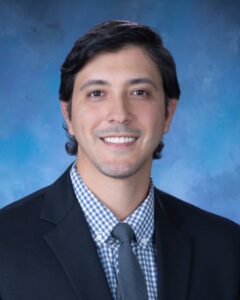 By Yehuda Joesph Benjamin, D.M.D., M.S.
Bob Dylan famously reminded us that “the times they are a-changin’,” signaling that the zeitgeist evolves from generation to generation. The times are indeed changing for endodontics and endodontic education, and those changes are unfolding in real time. The decisions we make today regarding technology adoption, policy, educational philosophy, and treatment philosophy will undoubtedly create a ripple effect that shapes the future of our specialty for years to come.
Maybe the most exciting aspect of this evolution is that all of us, from clinicians in various practice environments, educators, researchers, administrators, organized dentistry, and industry partners, will play a role in defining what that future looks like. So, the big question is: what kind of dentist, endodontist, and dental professional do we want for our future? When questions of this sort are answered thoughtfully, it has been my belief that the rest naturally falls into place.
Advances in technology, generational shifts in student expectations, the palpable shortage of endodontic educators, a changing healthcare system, and unprecedented access to information continue to transform both how we teach and how our students and residents learn. Coupled with the economic realities of dental education and healthcare delivery, these shifts reveal the sobering truth that endodontic education increasingly requires us to navigate competing forces.
These themes served as the backdrop for the AAE26 panel discussion, Education in and for the Future, which I had the honor of sharing alongside amazing endodontists and educators Drs. Melissa Drum, Avina Paranjpe, and Renato Silva.
Although each presentation approached the topic from a different perspective, several common themes emerged. Perhaps the most important was this: the future of endodontic education is not simply about adopting new technology. Rather, it is about preparing adaptable, compassionate professionals who can critically evaluate information, lead ethically, communicate effectively, commit to evidence-based practices, remain lifelong learners, and never forget about the importance of community.
One of the clearest themes from the panel was that the role of the educator continues to evolve. Today’s students and residents have unprecedented access to educational resources, digital platforms, social media, and artificial intelligence tools. Information is no longer difficult to obtain. As Dr. Drum emphasized during her presentation, the challenge is no longer simply access to information, but teaching learners how to critically evaluate information, recognize limitations and bias, and maintain sound clinical judgment in a data-rich environment.
Artificial intelligence is already influencing how learners gather information, summarize literature, and approach clinical questions. Our panel highlighted concerns regarding incomplete datasets, fabricated citations, bias, and the inability of AI to independently determine clinical relevance. We must teach learners how to use these tools thoughtfully while understanding their limitations. AI should serve as an adjunct to clinical decision-making, not a replacement for it.
Another theme discussed was redefining competency for the next generation of professionals. Dr. Paranjpe emphasized that modern competency extends beyond technical proficiency alone. Today’s graduates must be prepared for independent decision-making, evolving evidence, digital literacy, interdisciplinary collaboration, professionalism, and practicing within an increasingly transparent healthcare environment. Educational programs therefore face the challenge of redesigning curriculum and assessment systems to better reflect these broader competencies.
Our panel also addressed the importance of cultivating the next generation of clinician-scientists and educators. Dr. Silva highlighted the fragility of the dental educator pipeline. Evidence-based care depends upon strong research, mentorship, and future faculty development, yet many residents have limited exposure to academic career pathways. One meaningful takeaway was that research and teaching should not be viewed as separate from clinical practice. Research develops critical thinking. Teaching hones understanding. Programs that encourage curiosity, mentorship, scholarly activity, and involvement in organized dentistry help cultivate our future leaders and torch bearers.
My discussion revolved around leadership, ethics, emotional intelligence, and professionalism, noting that clinical competence without leadership, ethical reasoning, and emotional intelligence is incomplete. As technology continues to assume larger technical and analytical roles, distinctly human attributes have to and will become even more valuable. Communication skills, empathy, ethical reasoning, resilience, and leadership are increasingly recognized as critical differentiators in healthcare and many other industries adapting to this age of AI.
These soft skills influence how our future professionals communicate with patients, navigate uncertainty, lead teams, resolve conflict, and uphold professional identity. The future dentist and endodontist must be technologically fluent while remaining biologically grounded and deeply human in their approach to patient care.
They must also develop the problem-solving gene that does not fear uncertainty, and let’s face it, many of the teeth we encounter in endodontics carry some degree of uncertainty. Our responsibility is not to avoid those conversations, but to communicate uncertainty honestly and frame it in a way patients can understand so they can make truly informed decisions. I have always maintained that, when properly educated regarding their options, many patients will still choose to save their natural dentition and “kick the can down the road” on more invasive restorative alternatives.
Another point raised centered on the importance of language and our professional identity. Words matter. Are we “providers” or are we “doctors”? The titles we allow and use influence how society perceives our profession and how we perceive our responsibilities. Preserving professionalism, ethical standards, and the patient-doctor relationship remains critically important in an increasingly complex healthcare environment.
At the same time, we as a specialty must continue to demonstrate, through both science and clinical outcomes, that high-quality endodontic care works. The future of tooth retention through endodontics will not be secured simply through philosophy or marketing, but through consistently excellent treatment outcomes that are documented, studied, and shared.
All of us have a responsibility and a role in this effort. That means having a sound understanding of occlusion, orofacial pain, restorative dentistry, and the other disciplines that intersect with endodontics, while rendering excellent endodontic care, selecting cases appropriately, emphasizing long-term recall and follow-ups, documenting outcomes transparently, and committing ourselves to lifelong learning and engagement through study clubs, continuing education, and participation in organized dentistry.
If we do this well, patients and our broader dental community will increasingly reach a point where the merits of preserving natural dentition through endodontic treatment cannot be ignored.
Our panel closed by highlighting that the future of endodontic education is incredibly promising. While the tools, technologies, and educational environments around us may continue to evolve, the mission remains unchanged: to prepare compassionate, thoughtful, highly skilled endodontists and dentists capable of serving patients and advocating for the appropriate retention of teeth for generations to come. These are things I heard when I was in school 20 years ago. So maybe the more things change, the more they stay the same?
As educators, we have the privilege and responsibility of shaping not only competent clinicians, but also our future leaders, mentors, researchers, advocates, and stewards of our amazing profession. How we model our programs will be how many of our dentists and specialists view dentistry and endodontics throughout their careers. So I ask again: What kind of dentist, endodontist, and dental professional do we want for our future?
Note: Generative AI was used as an editorial aid to assist with grammar, clarity, phrasing, and organization. The ideas, opinions, final wording of the content are solely those of the author.
Dr. Yehuda Joesph Benjamin is Assistant Professor and Director of Post Graduate Endodontics, Chair, Department of Endodontics, Nova Southeastern University College of Dental Medicine.
Disclaimer
The views and opinions expressed by authors are solely those of the authors and do not necessarily reflect the official policy or position of the American Association of Endodontists (AAE). Publication of these views does not imply endorsement by the AAE.