
Aviate, Navigate, Communicate: How Learning to Fly Made Me a Better Endodontist
By Derek T. Peek, DDS, MS
I grew up around two things: teeth and airplanes.
My grandfather was a pilot who served as the Engineering Officer for the 412th Bomb Squadron of the 95th Bomb Group stationed in England during World War II, ultimately finishing the war as a captain and earning both a Bronze Star and the World War II Victory Medal. Aviation, to him, meant discipline under pressure — the understanding that every aircraft, every system, and every decision had to be right, because lives depended on it.
My father practiced endodontics for 45 years, and from him I learned that excellence in our specialty is not accidental. It is deliberate. It is systematic. It begins long before a handpiece ever touches enamel.
For most of my life, those two worlds ran parallel. Only recently did I realize how much they have in common.
When I began flight training, I expected to learn aerodynamics and airspace regulations. What I did not expect was how profoundly aviation would reshape the way I practice endodontics.
Diagnose First. Treat Second.
In aviation, you do not simply “go flying.”
You assess weather at departure and destination. You evaluate aircraft performance, fuel reserves, alternates, crosswinds, airspace, and your own readiness. Only after structured risk assessment do you make the go/no-go decision.
Endodontics should be no different.
We diagnose first. We gather clinical findings, pulpal testing, restorative assessment, periodontal evaluation, and increasingly, CBCT imaging. Only then do we determine whether treatment is appropriate.
In aviation, weather determines whether a flight should proceed. In endodontics, biology and restorability serve the same role.
Just because you technically can perform a procedure does not mean you should. Aeronautical Decision Making teaches pilots to identify hazards, assess risk, and mitigate threats before takeoff. In our operatories, that translates to thoughtful case selection — evaluating structural prognosis, medical stability, and long-term success before initiating treatment.
This diagnostic discipline is something the American Association of Endodontists has long emphasized through education and evidence-based care. As specialists, we are trained to pause, assess, and think critically before intervening. Aviation reinforced for me that this mindset is foundational to safety.
Declining treatment when risk outweighs benefit is not weakness — it is professionalism.
Layered Protection: The Swiss Cheese Model
In aviation safety, there is a concept known as the Swiss Cheese Model. It reminds us that accidents rarely result from a single catastrophic mistake. More often, they occur when multiple layers of defense — each with small imperfections — briefly align.
Endodontics is not so different.
Our defensive layers include diagnosis, CBCT imaging, magnification, rubber dam isolation, irrigation protocols, medical history review, blood pressure monitoring, documentation, and follow-up. A missed radiographic cue alone may not cause failure. Time pressure alone may not cause harm. But when small vulnerabilities align, outcomes can suffer.
The answer is not perfection. It is layered protection.
The culture of our specialty — reinforced through AAE meetings, continuing education, mentorship, and peer collaboration — strengthens these layers. Aviation simply gave me language to describe what our specialty already strives to do: build systems that reduce preventable risk.
One company that exemplifies this philosophy is Cirrus Aircraft, whose emphasis on training, standardization, and safety innovation — including the Cirrus Airframe Parachute System (CAPS) — has helped lead a transformation in safety culture across modern general aviation.
Checklists, Currency, and Preparedness
Pilots must maintain currency. To carry passengers, we must complete three takeoffs and three landings every 90 days. Emergency procedures are reviewed regularly, and checklists are non-negotiable — not because pilots lack skill, but because systems protect against human limitation.
That mindset has influenced how I run my practice.
We revisited our emergency protocols and invested in improved monitoring equipment, including a high-quality blood pressure cuff. On more than one occasion, it has revealed uncontrolled hypertension in patients who were unaware of their condition and allowed referral before treatment began. That layer of protection prevented a potential medical emergency.
We also rehearse critical scenarios — syncope, allergic reactions, hypertensive urgency — because readiness matters. Just as landings must be practiced to maintain proficiency, emergency response in a dental office must remain current.
Professionalism is not merely technical competence. It is preparedness.
CBCT as the Preflight Briefing
Before every flight, I review departure weather, en route conditions, and destination forecasts. I consider worst-case scenarios and alternates. The goal is not to eliminate risk — that is impossible — but to anticipate it.
CBCT imaging has become the endodontic equivalent of the comprehensive weather briefing.
Before rubber dam placement and access, I want to understand canal anatomy, curvature, root thickness, sinus proximity, resorptive defects, and potential perforation risk. I mentally walk through the case before I ever pick up a handpiece.
In aviation, we “chair-fly” procedures before executing them. In endodontics, CBCT allows us to “pre-treat” the case cognitively. When surprises are minimized, stress is reduced — and outcomes improve.
The mission in aviation is safe arrival. The mission in endodontics is predictable healing. Both require thoughtful planning before action.
Learning to fly as an adult has been humbling. It reminded me what it feels like to be a beginner again — to study regulations, practice maneuvers repeatedly, and submit to evaluation.
My grandfather’s B-17s required precision engineering and teamwork. My father’s decades in endodontics required the same quiet discipline. Through the education and community fostered by the American Association of Endodontists, our specialty continues that tradition of deliberate, systems-based care.
And nowhere is that more evident than in the residents preparing to lead our specialty.
Pilots are taught a simple but powerful principle: “Aviate, Navigate, Communicate.” In moments of stress, priorities matter. First, keep the aircraft flying. Second, understand where you are and where you are going. Only then communicate.
Endodontics follows a similar hierarchy. First, establish control of the clinical environment — diagnosis, isolation, visualization, and access. Next, understand the anatomy and chart the path forward. Only then do we communicate clearly with patients and colleagues about prognosis and outcomes.
Flying also offers another lesson that dentistry may be able to learn from: structured progression through training and demonstrated competency. Student pilots do not simply climb into increasingly complex aircraft or situations without preparation. Before flying certain airplanes, flying solo, or flying cross-country, pilots must receive specific instruction and earn instructor endorsements verifying they are ready for the next level of responsibility.
Endodontic education already emphasizes strong fundamentals, but aviation’s model of incremental skill endorsement is an interesting one to consider. As our specialty continues to evolve — with advanced imaging, complex retreatments, and new technologies — there may be opportunities to think creatively about how we teach and validate competency for increasingly complex procedures.
Planes and teeth may seem worlds apart, but both demand discipline, systems thinking, mentorship, and humility.
And perhaps one day those parallels will extend even further — maybe at a continuing education fly-in event humorously titled “Rudders and Root Canals,” where we explore CBCT, clinical standards, safety systems, and mentorship — both on the ground and in the clouds.
In many ways, the principle is the same in both professions: aviate, navigate, communicate.
Because whether in the sky or in the operatory, the mission is remarkably similar: to bring people home safely —and to save as many natural teeth as are truly Worth Saving.
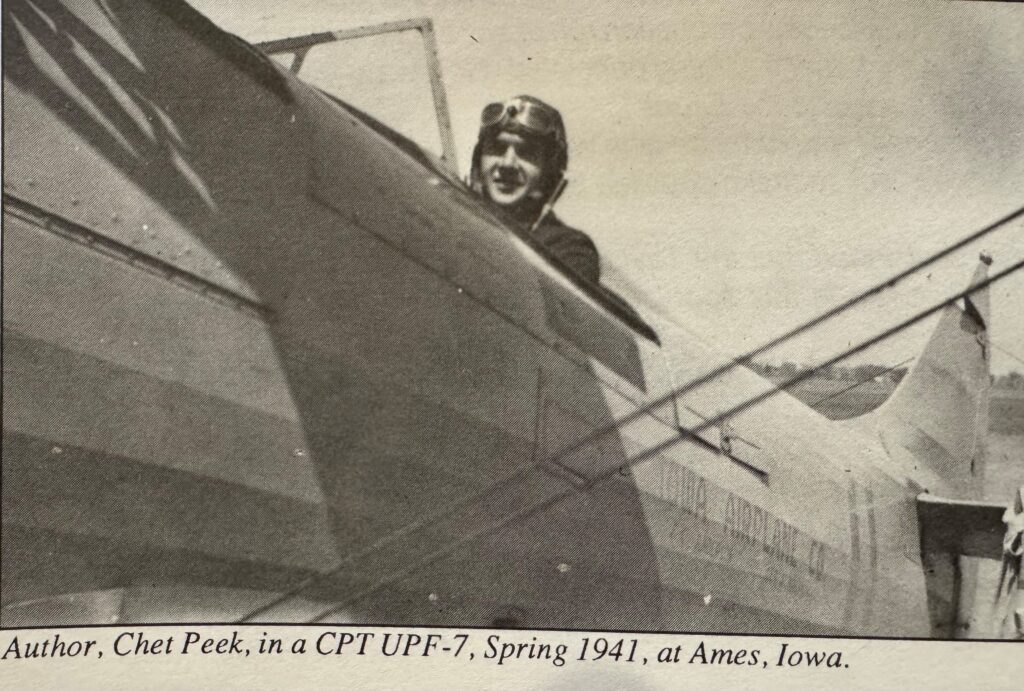
Dr. Peek’s grandfather, Chet Peek
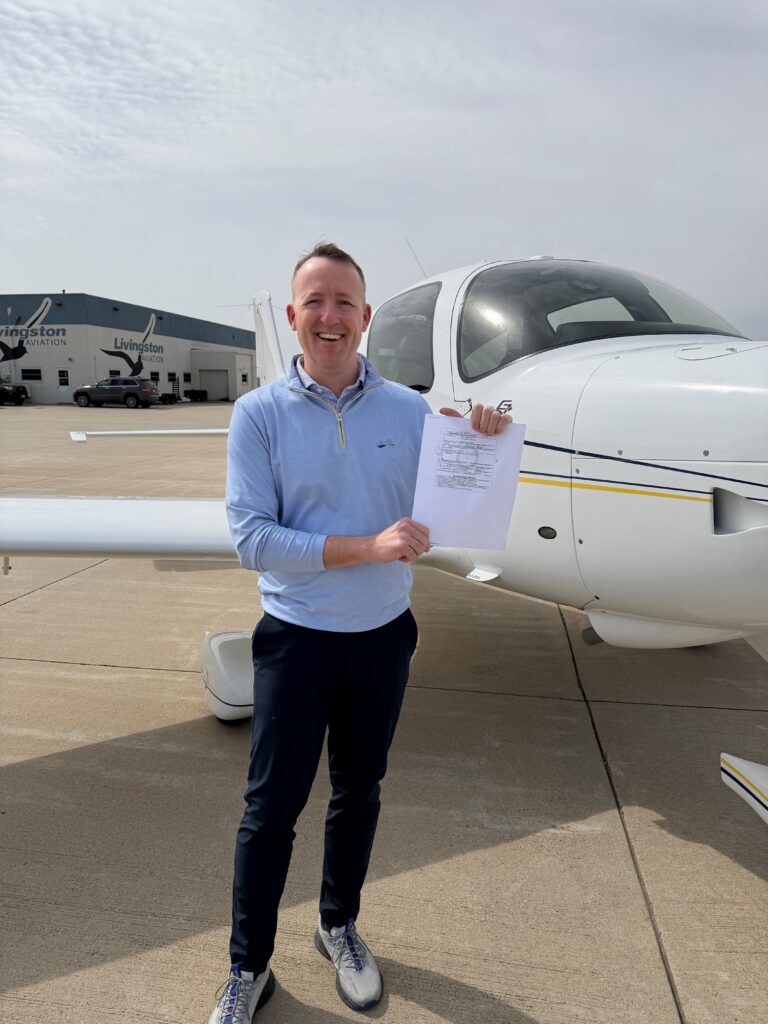
Dr. Peek after he passed his check ride
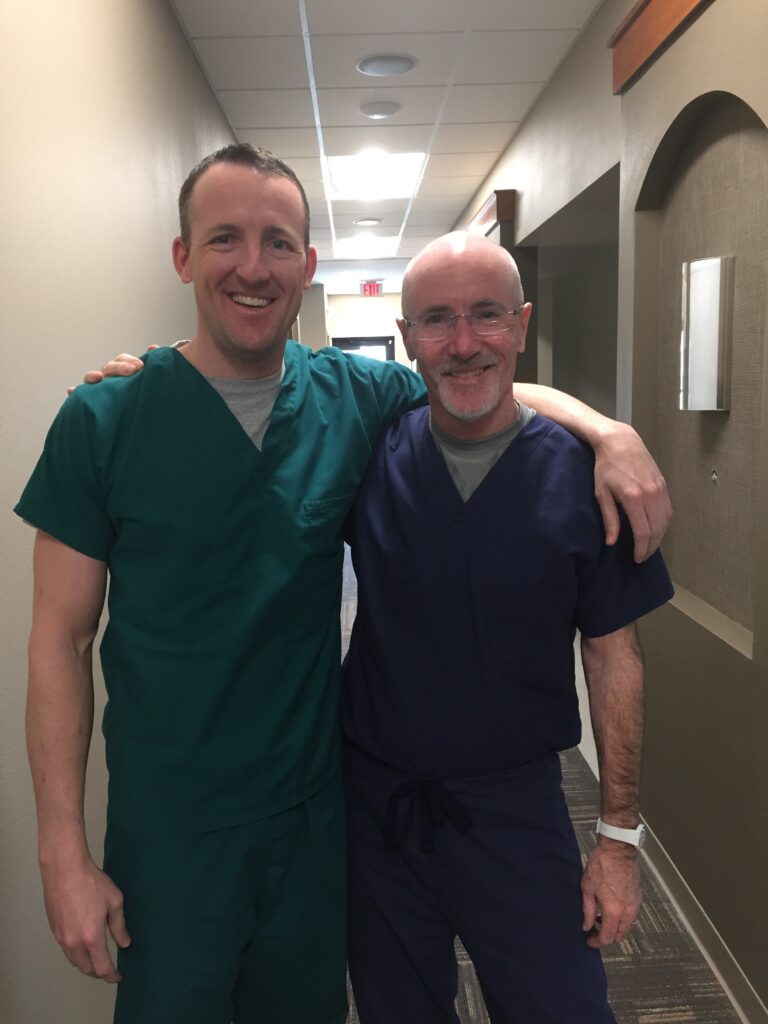
Dr. Peek with his father in the office
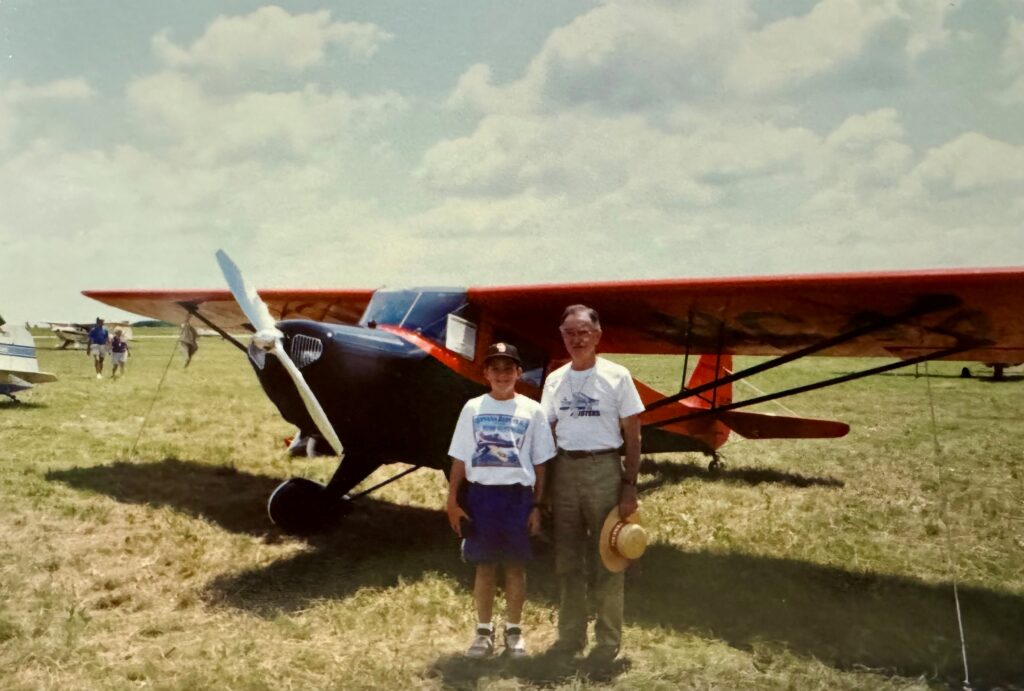
Dr. Peek with his grandfather at fly in
Dr. Derek T. Peek, DDS, MS is a Board-certified endodontist in private practice in Cedar Rapids, Iowa, and a Diplomate of the American Board of Endodontics. He is actively involved in organized endodontics and enjoys lecturing on clinical decision-making, CBCT integration, and practice systems. Outside the operatory, Dr. Peek is a private pilot who enjoys exploring the parallels between aviation safety and endodontic practice.