
Restoration of Endodontically Treated Teeth
By Cami Ferris-Wong, DDS
Some endodontists say that they would like to do more restorations after their root canal treatment but they just don’t think that their referrals would allow it. Others say that they don’t feel comfortable placing restorations because they haven’t done it since dental school, or since they were in general practice. I understand both of these concerns, and I was in the same boat 20 plus years ago, so I’d like to share the story of how I got into the practice of almost every tooth leaving my office with a permanent restoration in place.
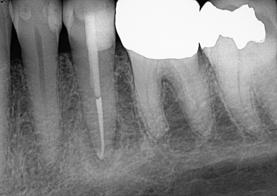
Figure 1: Example of immediate post and core restoration.
In a referral-based market, relationships are key, and my practice back in 2000 was no different. The restorative dentists wanted to restore everything, and a temporary filling was the culmination of almost every treatment I completed. I had a couple of referrals who were in insurance plans that did not pay for a core and a crown at the same visit, so they would ask me to place the core. Amalgam and core paste were the two options I had on hand and I used the former if isolation was an issue and the latter if it was a simple “fill the hole” situation. But the overall feeling was that you did what the referral asked you to do, period.
A few years later, a cascade of events happened that created a paradigm shift. First, Rick Schwartz and Ron Fransman published a beautiful article entitled “Adhesive dentistry and endodontics: materials, clinical strategies and procedures for restoration of access cavities.” 1 They outlined the scientific evidence that advocates the placement of a final restoration at the time of RCT and then went on to show how it can be done at a high level. The glossy photos of esthetically restored PFM crowns were impressive.
Around the same time, I had a patient that came in a week after I completed her RCT, complaining of a gray spot on her tooth. Her crown had been brand new when I accessed it, a standard core was placed and she was left with a less than ideal situation esthetically. She said “I just paid for a new crown and now after paying more money for the root canal, the crown looks bad.” I initially was going to tell her that there was no solution to her complaint other than a new crown, but the article in the JOE was rattling around in my brain, so I offered to redo the core procedure free of charge. This first esthetic endodontic access restoration probably took me 30 minutes to do, but it looked so much nicer than what she had and she was thrilled.
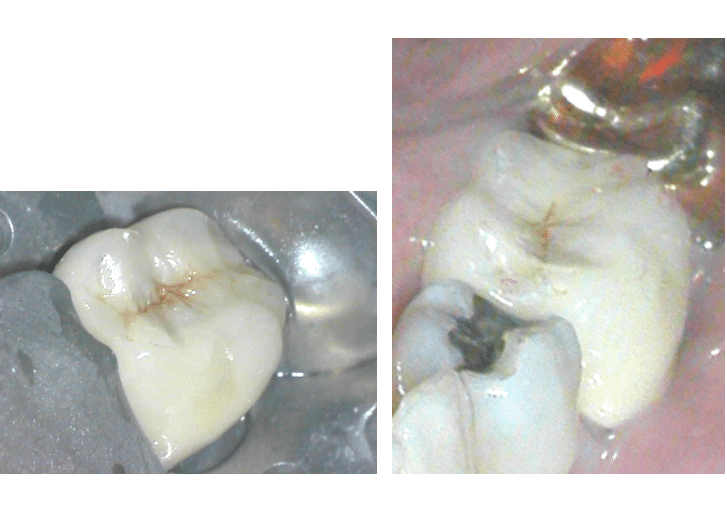
Figures 2 and 3: Endodontic access cavity permanent restoration in PFM crown filled with bulk fill composite, porcelain opaquer, macrofill composite surface, brown and white esthetic tints.
The technique for masking the gray shadow of the metal under the porcelain was detailed and time-consuming, requiring opaquer, tints, paint brushes and more. But with practice I was able to create an esthetic result and get the technique down to about 15 minutes. Fortunately, Zirconium crowns are much easier to restore esthetically, which is now a more common restoration in my practice.
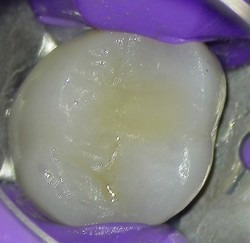
Figure 4: Zirconium crown permanent access cavity restoration.
Additionally, I was tired of seeing patients come back in with issues because they never had the tooth permanently restored. Either they came in with a fractured tooth because they bit on something hard, or the filling had fallen out and the access had been bathing in saliva. It was a frustrating scenario. I had a relationship with a local low-income clinic at the time who was booked out for months. I spoke with the director of the clinic and explained that I was concerned about the teeth not being restored right away, offering to do the cores and post and cores at a discount for their patients. She agreed that it would lessen a burden on them and that it would in fact benefit their patients.
Meanwhile, one of my best referrals and I decided to start a study club. In order to do this, we went to lunch almost every month together. Recognizing her restorative prowess, I picked her brain about the materials she used, techniques, and best practices and incorporated those things into my practice. She saw how dedicated I was to doing high-level restorative work and understood my concerns about rubber dam isolation and contamination issues. She started asking me to do the restorative on her cases and we would continue to swap tips and tricks over the years.
As for the rest of my referral population…change did not come overnight. I started slowly, calling the referral doctor to ask for permission to do the final restoration in certain cases. The main reasons that I asked to do the restorative were:
- The patient is very anxious and we were doing treatment under oral or I.V sedation. These were usually a slam dunk, because the referring doctor doesn’t typically want to deal with an anxious patient any more than we do. (Kids fall into this category as well).
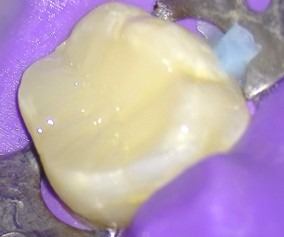
Figure 5: Build-up on tooth #19 for a 13 year-old boy.
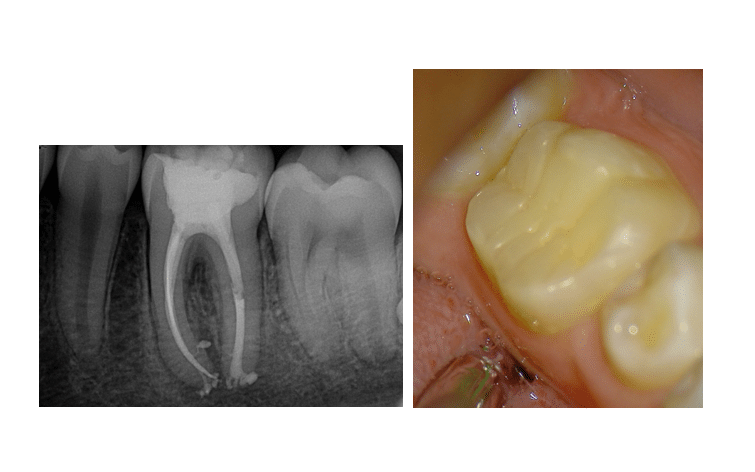
Figure 6 and 7: 1 year recall radiograph and photograph of tooth #19 on the same patient
2. The patient is leaving to go out of town or requests the final restoration. This happened often because I would explain the treatment and that they have to go back to their restorative dentist to fill the access cavity and they would say “Can’t you just do that?”
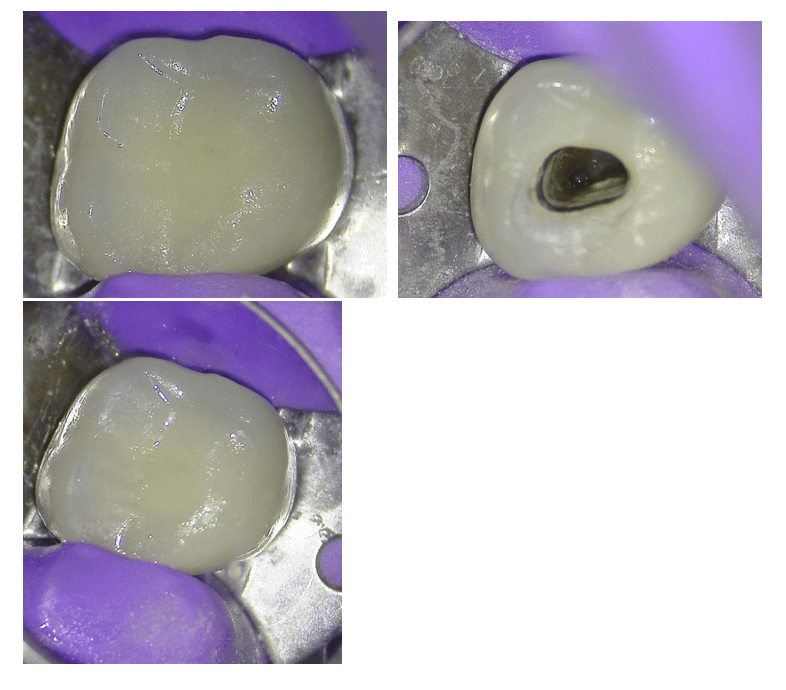
Figures 8-10: Pre-op photo, picture taken during treatment and post-op photo of tooth #2 PFM access restoration.
3. For teeth that have recurrent caries, deep decay is a good reason to ask to do the restoration (once you feel comfortable doing it). The general dentist is likely not going to place a rubber dam and we know that a post and core restoration will fare better with proper isolation 2. The dentist is generally thrilled if you are willing to remove the crown and caries and then restore the tooth afterward, making their crown prep much easier. (In these cases we take a pre-op impression and send it to the referral in case it helps them in planning or making the temporary crown.)
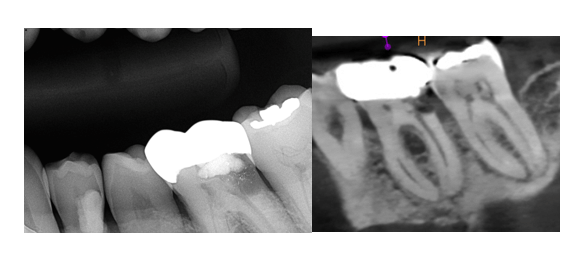
Figures 11 and 12: Pre-op radiograph and sagittal CBCT slice of tooth #19.
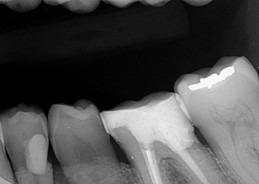
Figure 13: Post-op bitewing of post and core restoration.
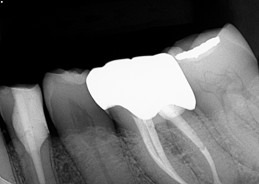
Figure 14: Bitewing radiograph after crown placement.
Over the years, my referrals began to understand how my completing the final restoration could benefit their practice, allowing them to do high-value restorative procedures instead of spending time on the build-up or an access cavity restoration. Additionally, patients are happy to leave with something solid in their mouth that will not break down over time. It is a worthwhile, albeit often gradual, endeavor that takes vision, strategy and a commitment to excellence.
References:
- Schwartz, R.S. ∙ Fransman, R. Adhesive dentistry and endodontics: materials, clinical strategies and procedures for restoration of access cavities: a review. J Endod. 2005; 31:151-165
- Goldfein J, Speirs C, Finkelman M. Amato R. Rubber dam use during post placement influences the success of root canal–treated teeth.
J Endod, 2013; 39, 1481-1484
Disclaimer
The views and opinions expressed by authors are solely those of the authors and do not necessarily reflect the official policy or position of the American Association of Endodontists (AAE). Publication of these views does not imply endorsement by the AAE.