
Saving Teeth. Restoring Health. A Conversation with Bjarne Bergheim, President & CEO, Sonendo, Inc.
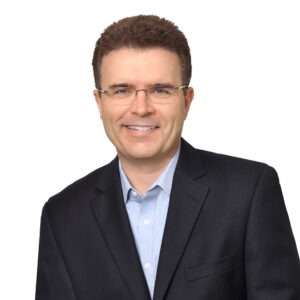
Bjarne Bergheim, President & CEO, Sonendo, Inc.
An engineer’s path into endodontics, the founding question behind the GentleWave® Procedure, and why technology, partnerships, and patient education are converging at the right moment for the specialty.
As Sonendo’s first employee, what initially drew you to the company?
By 2006, I had spent nearly a decade in cardiovascular device development, working on some of the earliest transcatheter heart-valve concepts. I was ready for the next big problem to solve.
Through Fjord Ventures — our family office and life-science accelerator — we began exploring an idea that would eventually become Sonendo and, ultimately, the GentleWave® Procedure.
What drew me in was the scale of the unmet need: root canal therapy is performed more than 15 million times each year in the U.S., yet the fundamental challenge had remained largely unchanged — how do you more effectively remove infection from the dentin without unnecessarily removing the dentin itself?
If we could remove infection from the dentin, we would effectively have the solution for tooth decay, the most prevalent chronic disease in the world. From my perspective, that was an extraordinary problem to solve. From a patient’s perspective, it was an even more meaningful one.
What problem was Sonendo founded to solve?
Sonendo started with a simple “what if.”
The standard approach to root canal treatment had — and still largely has — a mechanical premise: remove the infected dentin. When we founded Sonendo, we asked the question differently: what if, instead of removing the infected dentin, we could remove the infection from the dentin?
Leave the tooth structure intact, and go after the bacteria and necrotic tissue directly — even where a file can’t physically reach. That single inversion of the problem is what created the GentleWave® Procedure.
To solve this problem, we quickly realize we need to degass the fluids we use during the procedure. The presence of air within the root canal system – sometimes termed vapor lock – will prevent proper cleaning and disinfection into the dentin. Put another way, if degassed fluids are not used during the procedure, we found it impossible to properly clean and disinfect a root canal system. Degassing happens automatically in the GentleWave System.
We further created an automated way to 3-dimensionally dissolve tissue and bacteria within the root canal system. Every GentleWave procedure instrument accelerates fluids close to the speed of sound, that in turn creates a cavitation cloud and a broad spectrum of pressure waves throughout the root canal system to gently dissolve tissue and bacteria.
Combining tissue dissolution with degassing enabled exceptional cleaning and disinfection. But one very important challenge remained: we had to do all of this while keeping the entire root canal system under continuous negative pressure. We believe any presence – continuous or intermittent – can be a source of post-op discomfort for the patient. This is why our Procedure Instrument is designed to always provide negative pressure. We take this very fact seriously and this is why every procedure instrument manufactured at Sonendo is manually tested to ensure they consistently create negative pressure.
We believe this continuous negative pressure is the reason why our procedure instrument reduces post-op pain and discomfort. We also believe that the combination of degassed fluids, broad-spectrum cavitation energy, and advanced fluid dynamics allows GentleWave to deliver a multidimensional clean — reaching deep into complex root canal anatomy, including the microscopic isthmuses, fins, and lateral canals where bacteria can hide.
To this day, the original question still drives every decision we make: how do we clean more, while preserving more?
How does technology like GentleWave help endodontists deliver better outcomes?
GentleWave was designed around four vectors at once: clinical, patient, practitioner, and practice.
Clinically, it reaches areas that mechanical instrumentation cannot, while preserving more natural tooth structure. For patients, most report minimal to no post-operative discomfort, with most procedures completed in a single visit. For the practitioner, GentleWave provides reliable and predictable technology that allows the endodontist to focus on diagnosis, judgment, and patient relationships rather than fighting the procedure.
And on the practice side, the AAE’s recent Referral Patterns Survey makes a point endodontists shouldn’t miss: 76% of general dentists rate up-to-date equipment and technology as ‘very’ or ‘extremely’ important when choosing an endodontist to refer to — yet endodontists rank that factor last among the top factors they believe general dentists use when choosing a referral partner. That perception gap matters: technology is not just a clinical investment; it is a referral-relationship and practice-growth signal.
What do patients misunderstand most about root canal treatment today?
Two things, and they are connected.
First, the persistent myth that root canals are painful — a belief inherited from a version of the procedure that is decades out of date. Modern endodontics, performed by a specialist with current technology like GentleWave, is typically comfortable and aimed at relieving pain, not causing it.
Second, the assumption that extraction is a clean, equivalent alternative. “Just pull it and replace it” sounds straightforward, but a natural tooth is genuinely irreplaceable — biologically, emotionally, functionally, and often financially over a lifetime.
Roughly 78% of Americans say they would do almost anything to avoid losing a natural tooth, and yet many still choose extraction because they do not fully understand what saving the tooth involves today.
Closing that knowledge gap is one of the most important things we can do as an industry.
Why was it important for Sonendo to support Save Your Tooth Month?
Save Your Tooth Month is one of the purest expressions of our mission.
Tooth decay is the most prevalent chronic disease in the world — and yet most people still do not frame it as a public-health issue. The AAE has built a national platform around exactly the message we wake up every day to advance: natural teeth are worth saving, and endodontists are the specialists best equipped to save them.
Standing alongside the AAE during May is a way of saying: this is not only a Sonendo message or an AAE message. It is a shared message. And the more voices behind it, the further it travels.
Looking ahead, what excites you most about the future of endodontics?
What excites me most is that the next decade in endodontics is going to be defined by the same forces that have already transformed other areas of medicine: better data, better imaging, better materials, and intelligence built into the workflow.
The trend lines support it. The specialty has grown more than 40% since 2001, making it one of dentistry’s strongest-growth specialty segments.
Sonendo’s role is to keep doing what we set out to do from the beginning: solve the hardest cleaning and disinfection problem in dentistry, while making the GentleWave® Procedure more accessible, more efficient, and more clinically relevant.
Endodontists have treated nearly 2 million patients with GentleWave System to date. Every one of those patients is a person who got to keep something irreplaceable.
That is the part that still gets me out of bed in the morning.
Disclaimer
The views and opinions expressed by authors are solely those of the authors and do not necessarily reflect the official policy or position of the American Association of Endodontists (AAE). Publication of these views does not imply endorsement by the AAE.